

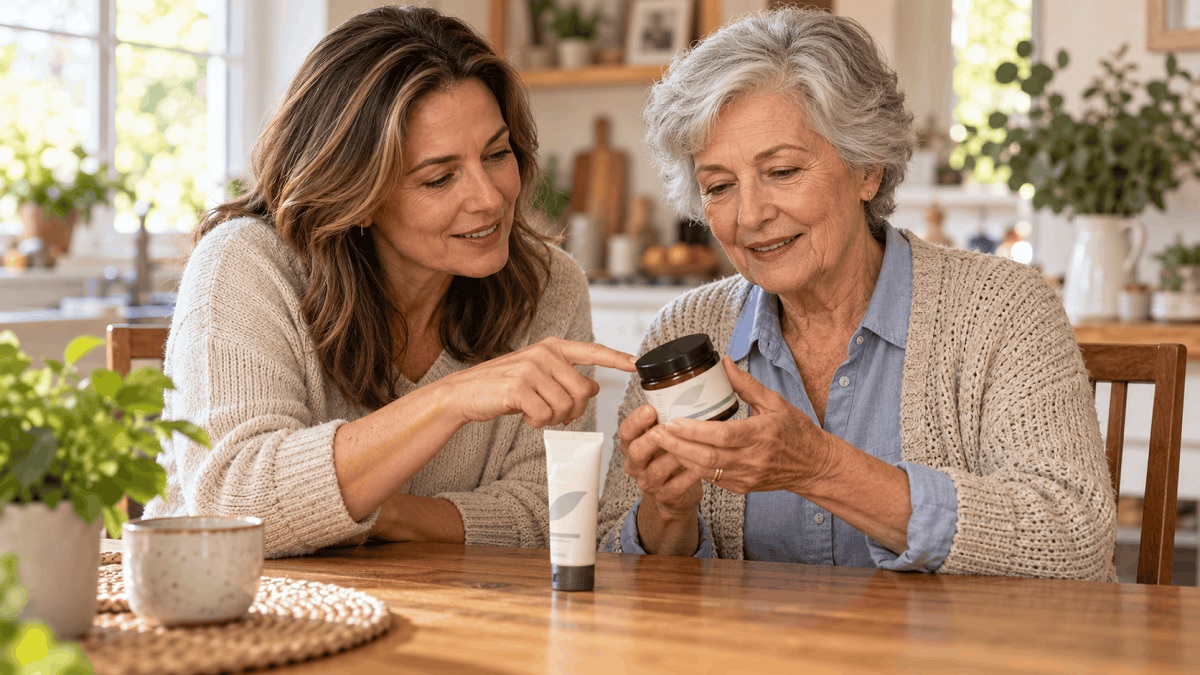
Your mom mentions that her hands bother her while gardening. Your dad has been looking at creams online but cannot decide which one to try. You want to help, so you start shopping—and quickly find dozens of products that all sound like the best choice.
Before buying a CBD topical for an older parent, start with their preferences, their existing care routine, and whether they actually want to try one. Then consider practical details such as packaging, fragrance, application, and cost.
A thoughtful purchase should make life easier. The biggest number on the label or the most enthusiastic review cannot tell you whether a product will be comfortable for your parent to use.
Have the Conversation Before Ordering
A surprise can be lovely when it is a book or a favorite meal. A personal-care product deserves a little discussion first.
Your parent may already have a cream they like. They may dislike the smell of certain ingredients, avoid cooling products, or have questions about CBD that they have not mentioned.
Ask what they would want from a topical and what they have disliked about previous purchases. Keep the conversation specific.
“I saw something you might like. Would you want to look at it together?” is often more useful than arriving with a jar and announcing that you found the answer.
This also gives your parent room to say no. Helping with the research is valuable even if they decide against buying anything.
Keep Their Existing Care in the Picture
If your parent has arthritis or another diagnosed condition, a new topical belongs in a conversation about their current care.
The Arthritis Foundation notes that research on CBD for arthritis remains limited and that people’s reported experiences vary. CBD should not replace disease-modifying treatment for inflammatory arthritis.
Before buying, help your parent ask their clinician or pharmacist about the specific product, especially if they take several medicines or already use medicated creams. Bring the ingredient list rather than only the brand name.
That makes the discussion more useful. A product containing CBD alone is a different question from a formula that also contains several other active or botanical ingredients.
There is no need to turn shopping into a medical appointment. The aim is simply to check that a new purchase makes sense alongside what your parent already uses.
Choose Packaging They Can Manage
A product can be easy to apply and surprisingly difficult to open.
Small screw caps, slippery lids, stiff pumps, and protective seals can all affect the experience. Before ordering, think about the containers your parent already handles comfortably.
Someone who finds twisting difficult may prefer a pump. Another person may find a broad jar lid easier to grip than a narrow tube cap. A pump is only helpful if pressing it is comfortable and the bottle stays steady.
Look for photographs that show the actual package. If the dimensions or opening mechanism are unclear, ask the seller.
Also consider the first use. You can offer to remove an outer seal or explain the closure, while keeping the original container and its directions intact. Your parent should still be able to identify the product and check its label later.
Ask About Fragrance and Skin Feel
Personal preferences become especially important when you are buying for someone else.
You may enjoy a strong peppermint scent. Your parent may find it overwhelming. You may like a rich balm, while they prefer a cream that feels lighter.
Use familiar products as a reference. Does your parent already use body lotion? Do they avoid fragranced hand creams? Have they mentioned disliking sticky or oily products?
Those answers can narrow the choices more effectively than a long list of advertised benefits.
Check ingredients even when a product sounds mild. Terms such as “natural” and “herbal” do not tell you whether it contains something your parent avoids. If they have known ingredient sensitivities, compare the full list before buying.
When several versions share one product page, make sure you are reading the details for the version you selected.
Think Through Where and When They Would Use It
A useful way to compare products is to picture one ordinary moment in your parent’s day.
Perhaps they would apply a topical while sitting in their favorite chair after an afternoon outside. Perhaps they want something convenient before getting dressed. They might need help reaching a shoulder, or prefer a product they can manage independently.
For readers exploring creams in the context of an older family member’s joint-care routine, Quiet Monk discusses the subject from a family perspective. You can read the full guide before comparing individual products.
Keep the practical questions in view:
- Can they comfortably reach the intended area?
- Is the container easy to hold and put down?
- Are the directions readable?
- Will they need to wash their hands afterward?
- Is there a convenient place to store it as directed?
Avoid turning the purchase into another complicated task. A simple routine that your parent chooses is easier to maintain.
Resist Buying the Strongest Option Automatically
When someone you love is uncomfortable, buying the most concentrated product can feel like doing more to help.
But a higher CBD amount does not establish that a particular topical is the right choice for that person. Age alone does not determine which strength to buy, either.
Start by identifying the product type, ingredients, and intended use. Check whether the stated cannabinoid amount refers to one container, a multipack, CBD alone, or a combination of cannabinoids.
Look for accessible laboratory information and a company willing to answer straightforward questions. If something about the label is confusing, ask before ordering.
Avoid choosing a large bundle just because the per-jar price is lower. A smaller initial purchase may be more sensible when you do not yet know whether your parent likes the formula or packaging.
Make Room for Honest Feedback
A gift can create an awkward obligation: the person receiving it may feel they should say it helped.
Take that pressure away early.
You can say, “If you don’t like it, that’s useful to know. We can return it if the policy allows.” That is more comfortable than repeatedly asking whether the product is working.
If your parent tries it, discuss concrete observations. Was the container manageable? Did the product irritate their skin? Did they like using it? Did they notice any worthwhile difference in the concern they hoped to address?
Follow the label’s directions rather than improvising an application schedule. Keep external-use products away from eyes and broken skin, and stop using them if irritation develops.
New or worsening symptoms deserve appropriate medical attention rather than another shopping experiment.
Check the Return Policy and Repeat Cost
Before paying, find out whether the seller accepts opened products, how long the return window lasts, and who pays return shipping.
Save the order confirmation somewhere easy to find. If you are handling the purchase, make sure your parent knows whom to contact with questions.
Think beyond the first jar, too. A product you can afford as an occasional gift may be expensive for your parent to replace regularly. Discuss that possibility without making them feel responsible for using everything you bought.
The most thoughtful choice is one your parent wants, understands, and can use comfortably. Sometimes that means buying a topical. Sometimes it means helping them compare options, prepare a question for their pharmacist, or decide that their current routine suits them better.
Source: Arthritis Foundation — CBD for Arthritis Pain: What You Should Know
